Director Salary 2026/27: £5,000, £6,708 or £12,570?
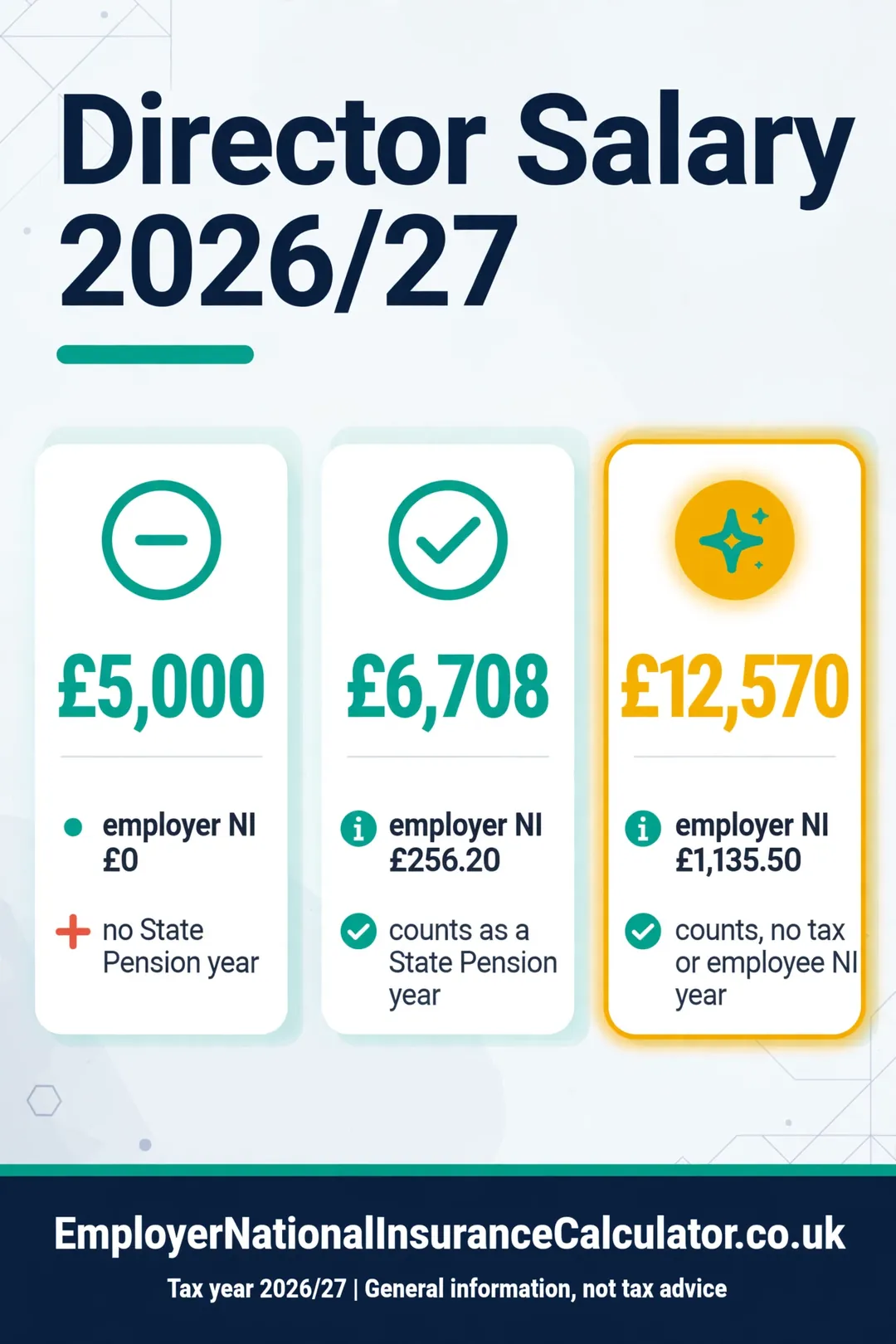
There are three common director salaries in 2026/27. At £5,000, the company pays no employer NI but the year does not count towards the State Pension. At £6,708, the year counts and employer NI is £256.20. At £12,570, employer NI is £1,135.50 and the director pays no income tax or employee NI. The best choice depends on whether the company can claim Employment Allowance.
This page compares the three in pounds and explains when each one fits.
In this guide13 sections
The three salaries compared
| £5,000 | £6,708 | £12,570 | |
|---|---|---|---|
| Employer NI | £0 | £256.20 | £1,135.50 |
| Employee NI | £0 | £0 | £0 |
| Income tax | £0 | £0 | £0 |
| Counts as a State Pension year | No | Yes | Yes |
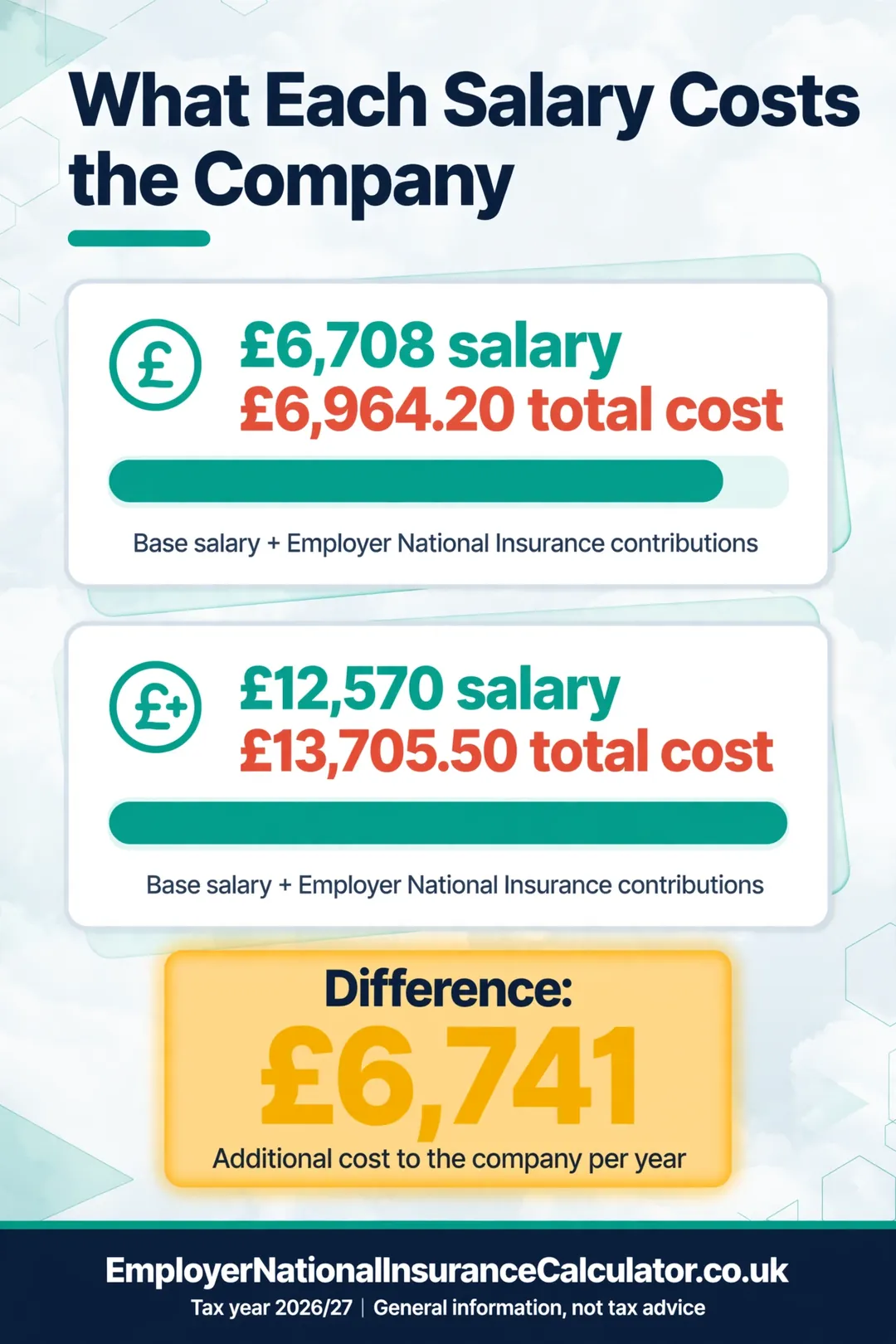
| Total cost to the company | £5,000 | £6,964.20 | £13,705.50 |
At £5,000 the company has no employer NI to pay, but the salary is below the Lower Earnings Limit. The year does not count. At £6,708 the salary just reaches the limit, so the year counts as a qualifying year, with a small NI cost. At £12,570 the salary uses up the whole personal allowance.
When each one makes sense
£5,000: a lower cost and no pension credit. This suits a director who already has a qualifying year from another job, or who has a full NI record and does not need the credit.
£6,708: the balanced choice for a one-person company. It gives a qualifying year at a cost of £256.20, and the salary is a deductible cost for corporation tax. For many sole directors who cannot claim Employment Allowance, this is a popular choice.
£12,570: where Employment Allowance applies. If another employee is paid above £5,000, the company can claim up to £10,500. That would cover the £1,135.50 on the director’s salary, so the director’s salary uses the personal allowance at no NI cost. The company also saves corporation tax on the higher salary.
Does the tax maths favour a higher salary?
Salary is a deductible expense, so a higher salary lowers corporation tax. The size of the saving depends on the company’s profit. The main rate is 25% for profits over £250,000, the small profits rate is 19% up to £50,000, and a sliding scale applies in between. Dividends are paid out of profits after corporation tax, so they do not get this deduction.
Your accountant should model salary and dividends together.
| Salary | Salary plus employer NI | Corporation tax saved at 19% | Corporation tax saved at 25% |
|---|---|---|---|
| £5,000 | £5,000 | £950 | £1,250 |
| £6,708 | £6,964.20 | £1,323.20 | £1,741.05 |
| £12,570 | £13,705.50 | £2,604.05 | £3,426.38 |
The company’s real cost is the first column minus the tax saved. At £12,570 with a 25% rate, it is £10,279.13.
Example: a one-person company with £60,000 of profit
| Item | £6,708 salary | £12,570 salary |
|---|---|---|
| Salary | £6,708 | £12,570 |
| Employer NI (no allowance) | £256.20 | £1,135.50 |
| Total cost to company | £6,964.20 | £13,705.50 |
| Profit left before corporation tax | £53,035.80 | £46,294.50 |
The £12,570 salary costs £6,741.30 more up front. The company recovers part of that through corporation tax, but it is not free. This is why the sole-director rule matters. The difference is that the director in the second case keeps £5,862 more as salary, tax-free, and the rest is a corporation tax saving.
If you have a second employee
Add a spouse or another worker, paid above £5,000 for genuine work, and the company can claim Employment Allowance. In that case a £12,570 salary can cost nothing in employer NI. The second employee’s pay must be real and reasonable for the role. HMRC checks.
| Item | Amount |
|---|---|
| Director employer NI at £12,570 | £1,135.50 |
| Spouse employer NI at £8,000 | £450 |
| Total employer NI | £1,585.50 |
| Employment Allowance | −£1,585.50 |
| NI to pay | £0 |
The second salary opens up the allowance. It also costs £8,000 in pay, which must be reasonable for the work done. HMRC may challenge pay that is not genuine. See the eligibility rules.
State Pension years
You need 35 qualifying years for a full new State Pension. A year counts if earnings reach the Lower Earnings Limit of £6,708 in 2026/27. A director paid £5,000 would miss out on a year unless they pay voluntary NI or have other income that fills the gap. This is why £6,708 is so popular for one-person companies.
| Salary | Qualifying year? | Employer NI | Extra cost for the year |
|---|---|---|---|
| £5,000 | No | £0 | n/a |
| £6,708 | Yes | £256.20 | £256.20 |
For a director who would otherwise miss the year, the credit is worth £256.20 a year in employer NI plus the salary itself. Voluntary Class 3 contributions can also fill a gap, so ask HMRC what they would cost.
Things to check before you set your salary
- Do you have 35 qualifying years in your NI record, or a gap to fill?
- Does the company have other employees paid above £5,000?
- How large are the company’s profits?
- Do you need a mortgage or loan, where salary matters?
- What do your other income sources look like?
- Are you in Scotland, where income tax bands differ?
This page gives general information, not tax advice. Speak with an accountant before setting a salary.
Common mistakes with director salaries
- Setting the salary too low and losing a qualifying year.
- Paying monthly amounts that add up to a figure different from the plan.
- Forgetting that a bonus or a loan written off counts as pay.
- Not checking the NI cost before the year starts.
- Assuming last year’s choice still works. The Lower Earnings Limit changes each year.
Comparing with a £12,570 employee
If you are choosing between paying a director £12,570 and paying a staff member the same, the NI is identical, £1,135.50. The difference is the Employment Allowance rule. See employer NI on a £12,570 salary for the full workings.
Pensions as an alternative
A company pension contribution carries no NI and is usually deductible. Many directors pay a small salary for the NI record and use pension contributions for the rest. See director pension contributions.
Frequently asked questions
What is the best director salary for 2026/27?
It depends on your position. For a sole director who cannot claim Employment Allowance, £6,708 is a common choice. If Employment Allowance applies, £12,570 is often more efficient.
Why £6,708?
It is the Lower Earnings Limit for 2026/27. A salary at or above it counts as a qualifying year for the State Pension.
Do I pay NI on a £12,570 director salary?
The company pays employer NI of £1,135.50, and you pay no employee NI or income tax.
Can I pay myself less than £5,000?
Yes. No employer NI is due, but the year does not count towards the State Pension unless you pay voluntary NI.
Does the director salary change with a new tax year?
The thresholds may change, so recheck each April. The Secondary Threshold is frozen at £5,000 until 2031, but the Lower Earnings Limit changes.
Can I take dividends instead of salary?
Dividends carry no NI, but they are paid from profits after corporation tax. A mix is common.
How many qualifying years do I need for a full State Pension?
35 years of NI contributions or credits are needed for the full new State Pension.
Can I raise my salary part-way through the year?
Yes. NI is based on the total for the year, so check the full-year figure first.
Does the same salary cost less for staff than for a director?
No, the employer NI is the same. The difference is whether the company can claim the allowance.
Can the company pay me £12,570 and claim the allowance on its own?
Not if you are the only employee paid above £5,000. A second genuine employee changes that.
Related guides
- Director National Insurance Calculator 2026/27
- Employment Allowance Eligibility: Who Can Claim?
- Employer NI on a £12,570 Salary (2026/27)
- Company Pension Contributions for Directors and NI
- Employment Allowance 2026/27: £10,500 Off Employer NI
Official sources
- National Insurance rates and categories
- HMRC: Rates and thresholds for employers 2026 to 2027
This page is independent information, not tax advice, and has no link with HMRC. Figures were checked on 20 October 2026 for the 2026/27 tax year. Always confirm the final figures with HMRC or your payroll provider.
2 Comments
Comments are closed.