Employer NI for Small Businesses: Hiring Cost and Cash Flow
Employer NI calculator
Add each pay level in your team. Get the bill, the cost and the working.
Loading the calculator…
Estimate only. Independent tool, not affiliated with HMRC. Rates checked 20 October 2026. Real payroll rounds each pay period.
A small business pays 15% employer NI on each employee’s pay above £5,000 in 2026/27. Employment Allowance takes up to £10,500 off the yearly bill. So a small firm with up to three staff on £28,000 may pay no employer NI at all, if it is eligible. Use the calculator, then read the hiring examples, the cash-flow effect and the first-year checklist.
In this guide16 sections
What a small business pays: examples
| Team | Employer NI before allowance | After £10,500 allowance |
|---|---|---|
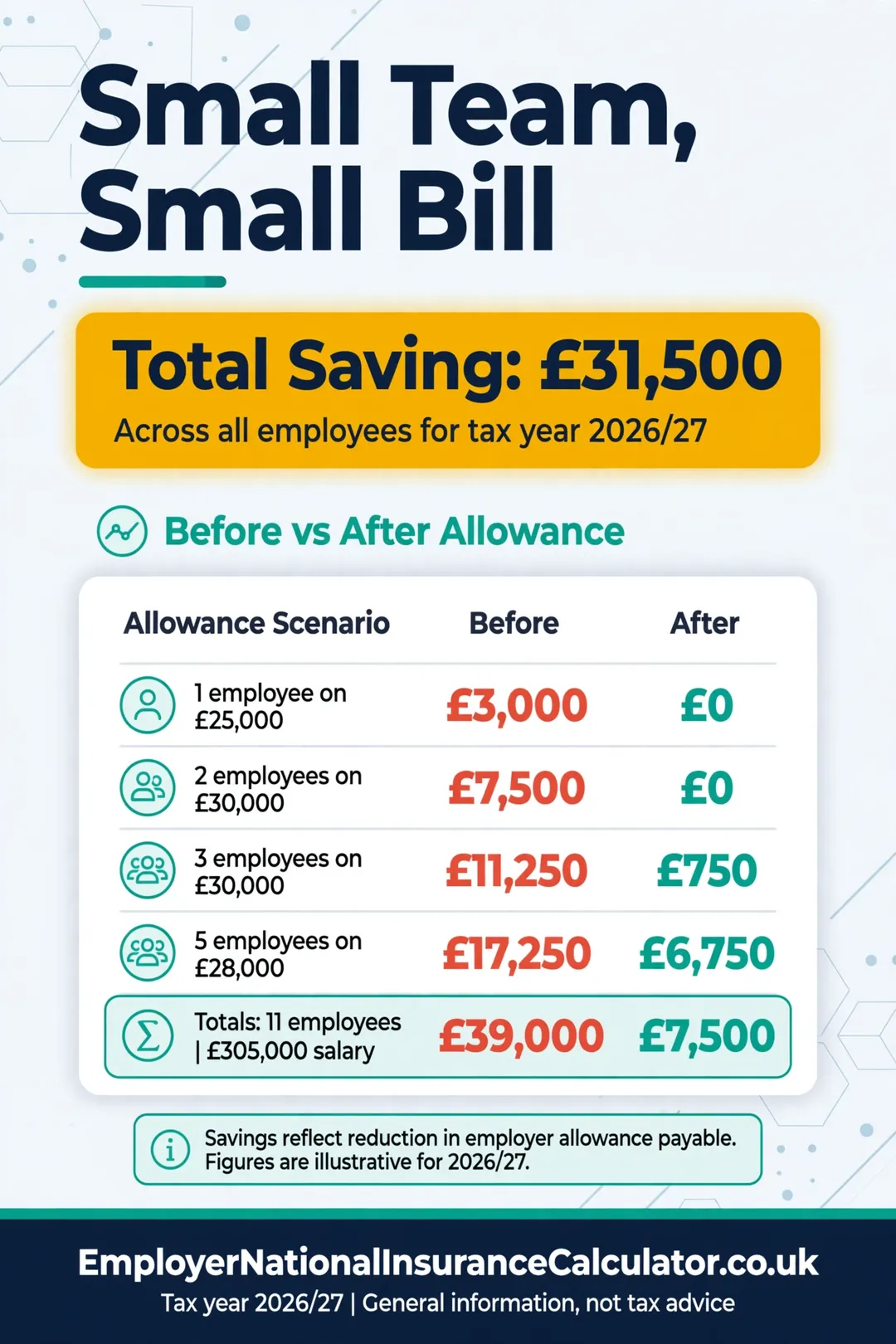
| 1 employee on £25,000 | £3,000 | £0 |
| 2 employees on £30,000 | £7,500 | £0 |
| 3 employees on £30,000 | £11,250 | £750 |
| 5 employees on £28,000 | £17,250 | £6,750 |
| 8 employees on £32,000 | £32,400 | £21,900 |
The allowance helps most for the first few hires. For larger teams it still saves up to £10,500 each year.
Your first hire
Your first hire has an extra step. If you are a company and you are the only person paid above £5,000, you cannot claim Employment Allowance. As soon as you hire someone and pay them above £5,000, the company can claim. See eligibility.
A first hire on £25,000 therefore costs the company £25,000 plus pension, with no employer NI, if the allowance covers it. Without the allowance, it would cost £3,000 more.
The true cost of a new hire
| Item | £25,000 hire | £30,000 hire |
|---|---|---|
| Salary | £25,000 | £30,000 |
| Employer NI | £3,000 | £3,750 |
| Employer pension at 3% of qualifying earnings | £562.80 | £712.80 |
| Total before allowance | £28,562.80 | £34,462.80 |
See the cost of employing someone for the full breakdown with holiday, equipment and recruitment.
Cash flow through the year
The allowance is used up over the year. If your monthly NI bill is £1,500, you pay nothing for seven months, and then £1,500 each month until April. Plan for it in your cash forecast.
| Monthly NI bill | Months covered by the allowance |
|---|---|
| £500 | 12 (all year, with allowance to spare) |
| £875 | 12 |
| £1,500 | 7 |
| £2,500 | About 4 |
Ways a small business can lower its NI
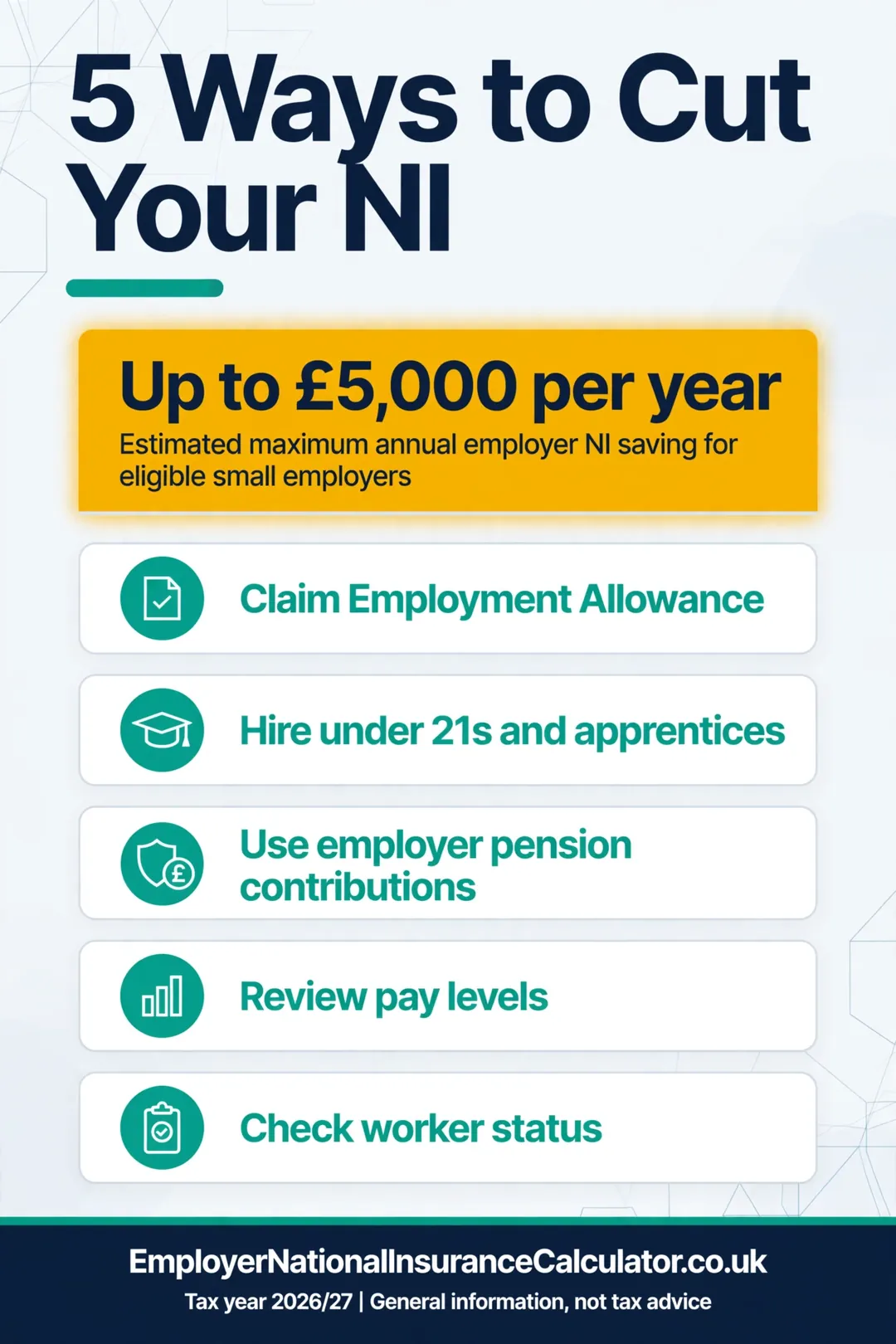
- Claim Employment Allowance. It is the biggest single saving.
- Hire under 21s or apprentices. They attract no employer NI on pay up to £50,270.
- Use pension contributions. Employer contributions carry no NI.
- Review pay levels. Each £1,000 of pay costs £150 more in NI.
- Check status. Genuine contractors do not attract employer NI, but wrongly treating employees as contractors leads to penalties.
Budgeting for growth
A rule of thumb: every new full-time hire adds salary plus 15% of everything above £5,000, plus a minimum 3% pension on qualifying earnings. For a £30,000 hire, that adds roughly £4,462.80 on top. After the first £10,500 of employer NI, there is no further allowance, so later hires cost the full rate.
Case study: growing from one to six staff
Each hire is paid £28,000. Employer NI is £3,450 per person.
| Staff | NI before allowance | NI after £10,500 allowance |
|---|---|---|
| 1 | £3,450 | £0 |
| 3 | £10,350 | £0 |
| 4 | £13,800 | £3,300 |
| 6 | £20,700 | £10,200 |
The fourth hire is the first to cost real NI. The next hires each add £3,450. Plan the budget for this step when you set pay and prices.
Hiring a young person or apprentice
If your fourth hire is under 21 or an apprentice, the NI cost for that person is nil. In the table above, the NI after the allowance would stay at £0 with four staff. See under-21 relief and apprentice relief.
Paying HMRC
You pay employer NI with your PAYE bill by the 22nd of the next month, or quarterly if your average bill is under £1,500 a month. See how to pay employer NI.
The first-year checklist
- Register as an employer with HMRC before the first payday.
- Set up payroll software.
- Claim Employment Allowance, if eligible.
- Set up the workplace pension.
- Put reminders in for monthly payments. See how to pay.
- Get employer’s liability insurance, which is a legal requirement for most employers.
Where to start if you are new to payroll
If the terms are new, read what employer NI is first. Then use the cost of employing someone guide before you make an offer, and check your Employment Allowance position.
Three small business scenarios
A café with six staff. Four part-timers on £12,000 and two full-timers on £24,000. Employer NI is £9,900, so Employment Allowance covers it in full and the café pays nothing.
A building firm with eight staff. Two apprentices on £19,000 (category H), one under-21 on £22,000 (category M) and five staff on £34,000. Employer NI is £21,750 before the allowance and £11,250 after it. The three relief hires add nothing.
A design studio with twelve staff. Twelve staff on £38,000. Employer NI is £59,400 before the allowance, and £48,900 after it. Pension salary sacrifice for five staff at £2,000 each would cut it by a further £1,500.
What changes as you grow
| Team size | Average pay | Bill after allowance | Share of payroll |
|---|---|---|---|
| 5 | £30,000 | £8,250 | 5.5% |
| 15 | £30,000 | £45,750 | 10.2% |
| 30 | £30,000 | £102,000 | 11.3% |
The allowance is a fixed sum, so its share of your bill shrinks as you grow. Employer NI as a share of payroll rises towards 12.5% for staff on £30,000.
Frequently asked questions
How much employer NI does a small business pay?
15% on each employee’s pay above £5,000 a year, less up to £10,500 of Employment Allowance.
Do small businesses pay a lower rate?
No. They pay the same rate, but the allowance helps them most.
Do I pay employer NI if I employ my partner?
If your partner is a genuine employee paid above £5,000, yes. The company may also claim Employment Allowance as a result.
Do sole traders pay employer NI?
Only if they have employees paid above the threshold. They do not pay employer NI on their own profits.
Can I avoid employer NI by using freelancers?
Genuine freelancers don’t attract it, but HMRC looks at the real working relationship, not the label.
What is the cost of hiring one person?
Salary plus employer NI plus pension. A £30,000 hire costs about £34,462.80 before the allowance.
When should I register as an employer?
Before the first payday. HMRC advises allowing time for registration, so do not leave it to the last week.
Do I need payroll software?
Yes, for most small employers. HMRC’s Basic PAYE Tools is a free option.
What is the first thing I should do before I hire?
Work out the full cost with a calculator, and check you can afford it for a year.
Is Employment Allowance automatic?
No. You must claim it through your payroll software. See how to claim.
Related guides
- Employment Allowance 2026/27: £10,500 Off Employer NI
- Cost of Employing Someone UK 2026/27: Calculator
- How and When to Pay Employer NI to HMRC
- Employer NI Exemptions and Reliefs 2026/27
- Employment Allowance Eligibility: Who Can Claim?
Official sources
This page is independent information, not tax advice, and has no link with HMRC. Figures were checked on 20 October 2026 for the 2026/27 tax year. Always confirm the final figures with HMRC or your payroll provider.
2 Comments
Comments are closed.