Employer NI Rates History: 2023/24 to 2026/27
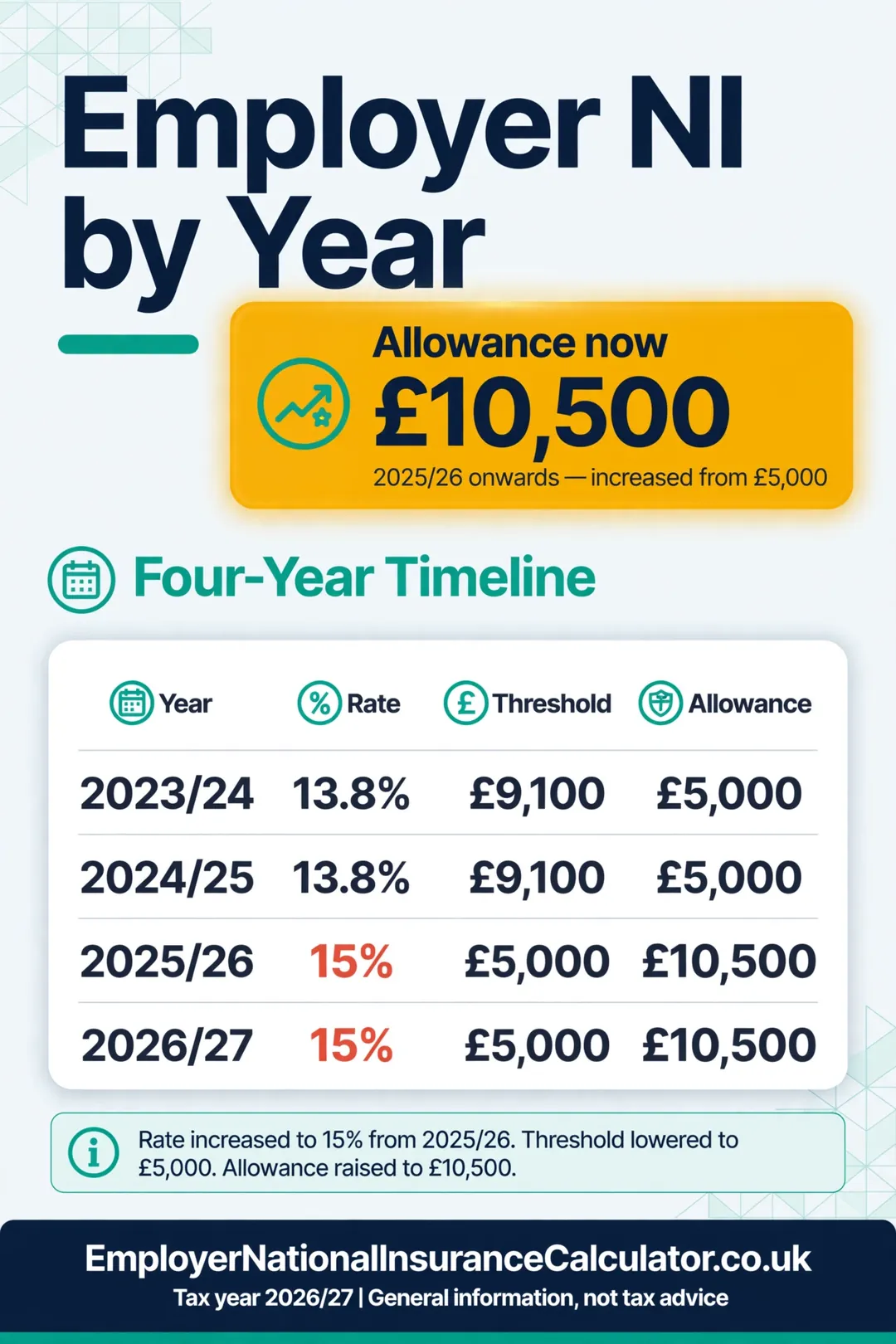
Employer NI went from 13.8% above £9,100 in 2023/24 to 15% above £5,000 in 2026/27. Employment Allowance more than doubled over the same time. The table below shows each year side by side, and the sections after it show what the changes cost in pounds.
In this guide18 sections
Year-by-year table
| Tax year | Employer rate | Secondary Threshold | Employment Allowance |
|---|---|---|---|
| 2023/24 | 13.8% | £9,100 | £5,000 |
| 2024/25 | 13.8% | £9,100 | £5,000 |
| 2025/26 | 15% | £5,000 | £10,500 |
| 2026/27 | 15% | £5,000 | £10,500 |
Employer NI on a £30,000 salary
| Tax year | Employer NI |
|---|---|
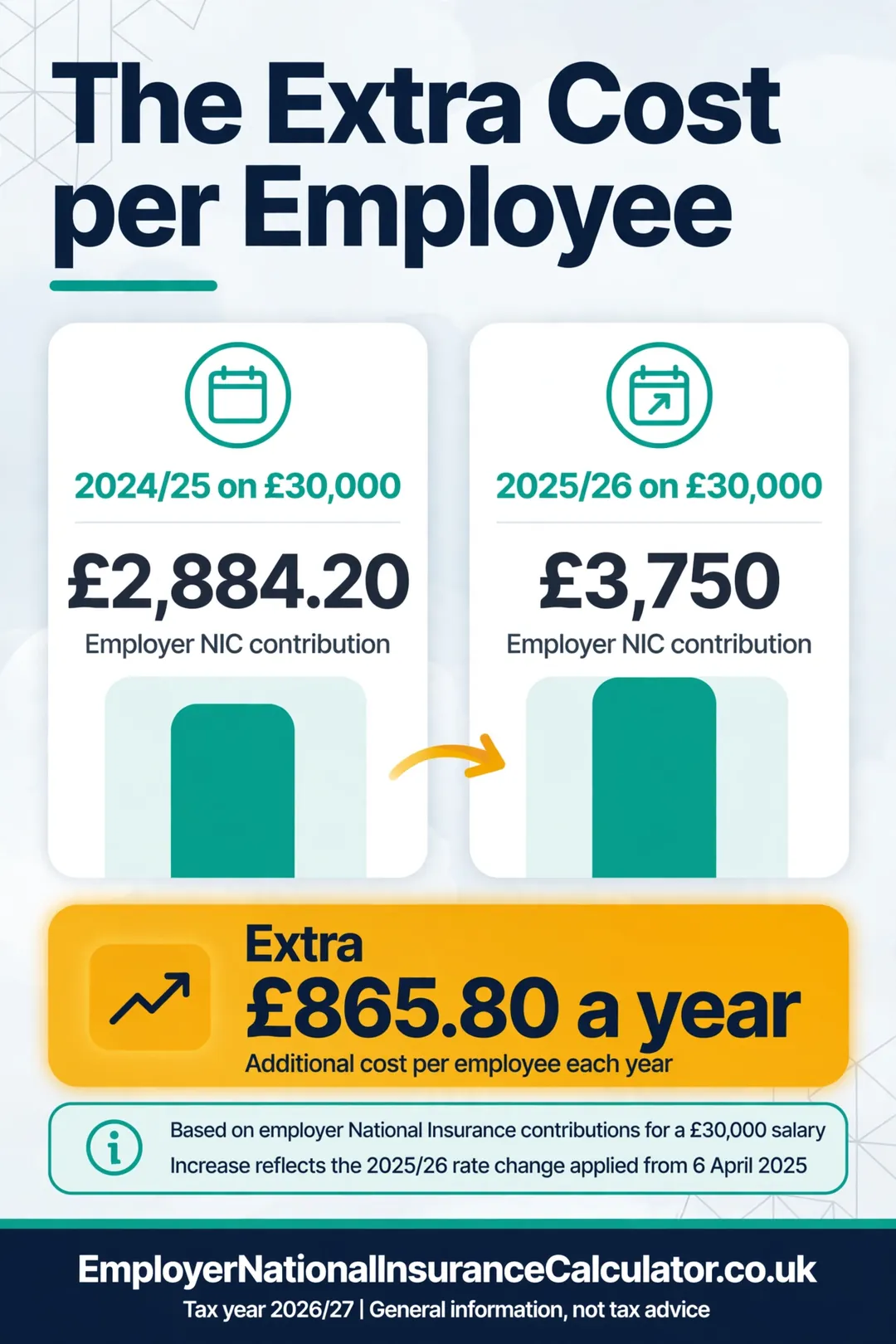
| 2023/24 | £2,884.20 |
| 2024/25 | £2,884.20 |
| 2025/26 | £3,750 |
| 2026/27 | £3,750 |
The bill rose by £865.80 a year for each employee on £30,000. For a firm with ten such staff, the extra cost is £8,658 before Employment Allowance.
Over the four years, one such employee cost £13,268.40 in employer NI in total.
What changed in April 2025
Three things moved at once. The rate rose from 13.8% to 15%. The threshold fell from £9,100 to £5,000. Employment Allowance rose from £5,000 to £10,500, and the £100,000 cap on who could claim it was dropped.
Why the cost rose more than the rate suggests
A rise from 13.8% to 15% sounds small. It is 1.2 percentage points. The threshold fall had the bigger effect, because it put £4,100 more pay into the charge for every employee.
| Part of the change | Effect on a £30,000 salary |
|---|---|
| Rate from 13.8% to 15% on the old charged pay of £20,900 | £250.80 |
| Threshold fall of £4,100 at 15% | £615 |
| Total | £865.80 |
So the threshold fall accounts for about 71% of the extra cost.
What has not changed since
The Secondary Threshold is frozen at £5,000 until April 2031. The Upper Secondary Threshold for under-21s, apprentices and veterans stays at £50,270. See the 2026/27 changes for the small updates this year.
Why the rates changed
The government announced the change at the Autumn Budget in October 2024 and applied it from 6 April 2025. It said the aim was to raise money for public services. At the same time it increased Employment Allowance, so that the smallest employers would pay no more, or even less.
What the changes added up to
| Business | Extra NI per year, 2025/26 against 2024/25 |
|---|---|
| 1 employee on £30,000 | £865.80 before Employment Allowance |
| 10 employees on £30,000 | £8,658 before Employment Allowance |
| 10 employees on £45,000 | £10,458 before Employment Allowance |
| 50 employees on £30,000 | £43,290 before Employment Allowance |
Employment Allowance went up by £5,500, which cancels out the rise for very small firms. Mid-sized firms see the full effect.
What a ten-person firm paid each year
Take ten employees on £30,000 each, with no relief categories.
| Tax year | Bill before allowance | Allowance | Bill to pay |
|---|---|---|---|
| 2023/24 | £28,842 | £5,000 | £23,842 |
| 2024/25 | £28,842 | £5,000 | £23,842 |
| 2025/26 | £37,500 | £10,500 | £27,000 |
| 2026/27 | £37,500 | £10,500 | £27,000 |
The real step-up was £3,158 a year for this firm. Without the larger allowance it would have been £13,658. This is why Employment Allowance matters so much to smaller employers. See the Employment Allowance guide.
How different businesses fared
| Business | 2024/25 bill | 2026/27 bill | Change |
|---|---|---|---|
| 2 staff on £25,000 | £0 | £0 | No change |
| 10 staff on £30,000 | £23,842 | £27,000 | £3,158 more |
| 40 staff on £28,000 | £99,328 | £127,500 | £28,172 more |
| 200 staff on £35,000 | £714,840 | £889,500 | £174,660 more |
For the 200-person firm, the 2024/25 figure has no allowance because its bill was over the old £100,000 cap.
Employee rates over the same time
Employee NI also fell: the main rate went from 12% to 10% in January 2024 and then 8% from April 2024. It stays at 8% in 2026/27. So the employer share has grown while the employee share has fallen.
| Period | Employee main rate (£12,570 to £50,270) |
|---|---|
| Until 5 January 2024 | 12% |
| 6 January to 5 April 2024 | 10% |
| From 6 April 2024 | 8% |
For an employee on £30,000, the change from 12% to 8% was worth £697.20 a year, which is more than the employer’s extra cost on a lower salary. The two changes pull in opposite directions, but they are paid by different people.
Planning from the history
Three lessons come from the trend. The threshold is frozen, so pay rises are fully charged. The allowance helps most when your bill is under £10,500. And relief categories such as under-21s and apprentices become more valuable as the main rate rises. See the exemptions hub.
Why the history matters for planning
Looking back helps with forecasting. Over three years, the employer bill for a £30,000 employee moved from £2,884.20 to £3,750. If the threshold stays frozen and pay rises at 3% a year, the same employee costs about £4,024.05 by 2028/29. Use the salary table to model your own staff.
| Year | Salary with 3% rises | Employer NI |
|---|---|---|
| 2026/27 | £30,000 | £3,750 |
| 2027/28 | £30,900 | £3,885 |
| 2028/29 | £31,827 | £4,024.05 |
| 2029/30 | £32,781.81 | £4,167.27 |
| 2030/31 | £33,765.26 | £4,314.79 |
Check a past year
To work out the bill for a previous year, use the 2025/26 calculator or switch the tax year on the main calculator. The “Compare years” tab shows all three years for your own payroll.
Questions to ask your accountant
- Have we claimed Employment Allowance for every year we could?
- Are our category letters right for all staff?
- Could pension salary sacrifice reduce our bill before 2029? See salary sacrifice savings.
- Do we qualify for any relief? See the exemptions guide.
- Did we get the right Employment Allowance in the years the cap applied?
Where to go next
- See how the rates look this year on the 2026/27 rates page.
- Read what else changed in National Insurance changes for 2026/27.
- Check your own cost with the calculator.
Frequently asked questions
What was the employer NI rate before April 2025?
13.8%, charged on pay above £9,100 a year.
When did the employer NI rate go up to 15%?
On 6 April 2025, at the start of the 2025/26 tax year.
Was Employment Allowance always £5,000?
It was £5,000 from 2022/23 until April 2025. It then rose to £10,500.
Will the rate change again?
No change to the 15% rate has been announced for 2026/27. The threshold is frozen until April 2031.
What was the employer NI rate in 2023/24?
13.8% on pay above £9,100 a year.
What is the biggest change in recent years?
The April 2025 combination: rate up to 15%, threshold down to £5,000 and Employment Allowance up to £10,500.
Has employee NI changed too?
Yes. It fell to 8% for earnings between £12,570 and £50,270, and is 2% above that.
Where can I see rates before 2023/24?
HMRC publishes archived rates and thresholds. Before 2023/24 the employer rate was 13.8% for most years, with a different threshold.
How much more does a typical employee cost in employer NI now?
For a £30,000 salary, £865.80 more per year than in 2024/25. See the cost of employing someone page for the full picture.
Why did the cost rise more than the rate suggests?
Because the threshold fell from £9,100 to £5,000, which put £4,100 more pay into the charge for each employee.
Can I get money back for the years the rate was higher?
Only where there was an error or an unclaimed relief. See how to claim back employer NI.
Related guides
- Employer NI Rates 2026/27: All Rates and Thresholds
- Employer NI Rates 2025/26: Rates and Thresholds
- National Insurance Changes for 2026/27
- Employer NI Calculator 2025/26
- Employment Allowance 2026/27: £10,500 Off Employer NI
Official sources
- National Insurance rates and categories
- HMRC: Rates and thresholds for employers (archive)
This page is independent information, not tax advice, and has no link with HMRC. Figures were checked on 20 October 2026 for the 2026/27 tax year. Always confirm the final figures with HMRC or your payroll provider.
2 Comments
Comments are closed.